Planning flatbed hire in Wolverhampton
Most open-bed hires go wrong at the far end, not at the collection counter. A pallet of blocks is ordered, the van is booked for mid-morning, and nobody checks whether the street outside the drop will take a vehicle at that hour. For Wolverhampton jobs, and especially anything heading into the city centre, the better habit is to start with the moment the load must come off and plan every earlier step around it.
This page is written for householders moving garden materials, tradespeople running site supplies and businesses handling stock or equipment. It covers choosing a dropside category, the licence and weight questions that decide who can drive, how to restrain and unload safely, and the local checks worth doing before the keys are in your hand. Every figure for an individual vehicle still needs confirming with the supplier when you book.
Start with the city-centre delivery window
Wolverhampton Council publishes delivery periods for its city-centre pedestrian zone of 6am to 8.30am and 5pm to 10pm. Outside those periods, the council says access is by authorisation only. For a flatbed job that turns the usual timetable upside down: the fixed point is the window at the destination, and collection, loading and the drive all have to fit in front of it.
If you need to be unloaded and clear before 8.30am, count back honestly. Allow time for the receiving team to be ready, for the sides to drop and the goods to come off, for restraints to be released in the right order, and for the vehicle to leave. Then add the drive and a margin for loading checks. That often means loading the afternoon before, so ask the supplier whether an earlier collection or overnight hire is possible rather than assuming it.
Authorisation, rising bollards and realistic expectations
The zone is controlled with rising bollards, so a vehicle arriving after the morning period closes should expect the way in to be shut. Do not plan a routine drop on the hope that someone on an intercom will let you through. Authorisation outside the published periods is for the council to decide, and it should never be treated as available on request.
Before committing to a booking, look at the current signs at the entry you intend to use, confirm the exact entry point with the person receiving the goods, and ask whether any permission covers the specific vehicle you will drive. If the answer is unclear, the evening period or an unloading spot outside the zone, with goods moved the last stretch by trolley or pallet truck over a suitable surface, is usually the calmer plan.
Height and weight checks for the final approach
The council's restricted-structures map marks weight-restricted bridges with purple icons and height-restricted bridges with orange icons, and shows heavy load routes in red and high load routes in green. The page is several years old, so use it to spot places worth checking, not as a list of permitted routes or an approved truck route.
A dropside's height changes the moment it is loaded. Stacked pallets, a machine on the deck or bundled tube standing proud of the headboard can make the loaded vehicle taller than the empty one you collected. Measure total height with the load on, note the plated gross weight, and compare both with the signs on the last streets before the drop. If a structure near the destination looks tight, choose another approach before setting off rather than discovering it at the kerb.
Choosing a dropside category for the load
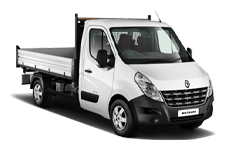
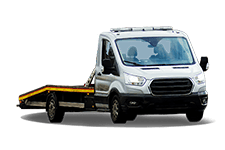
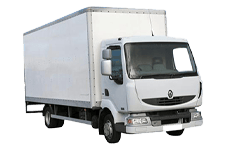
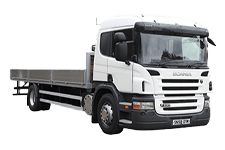
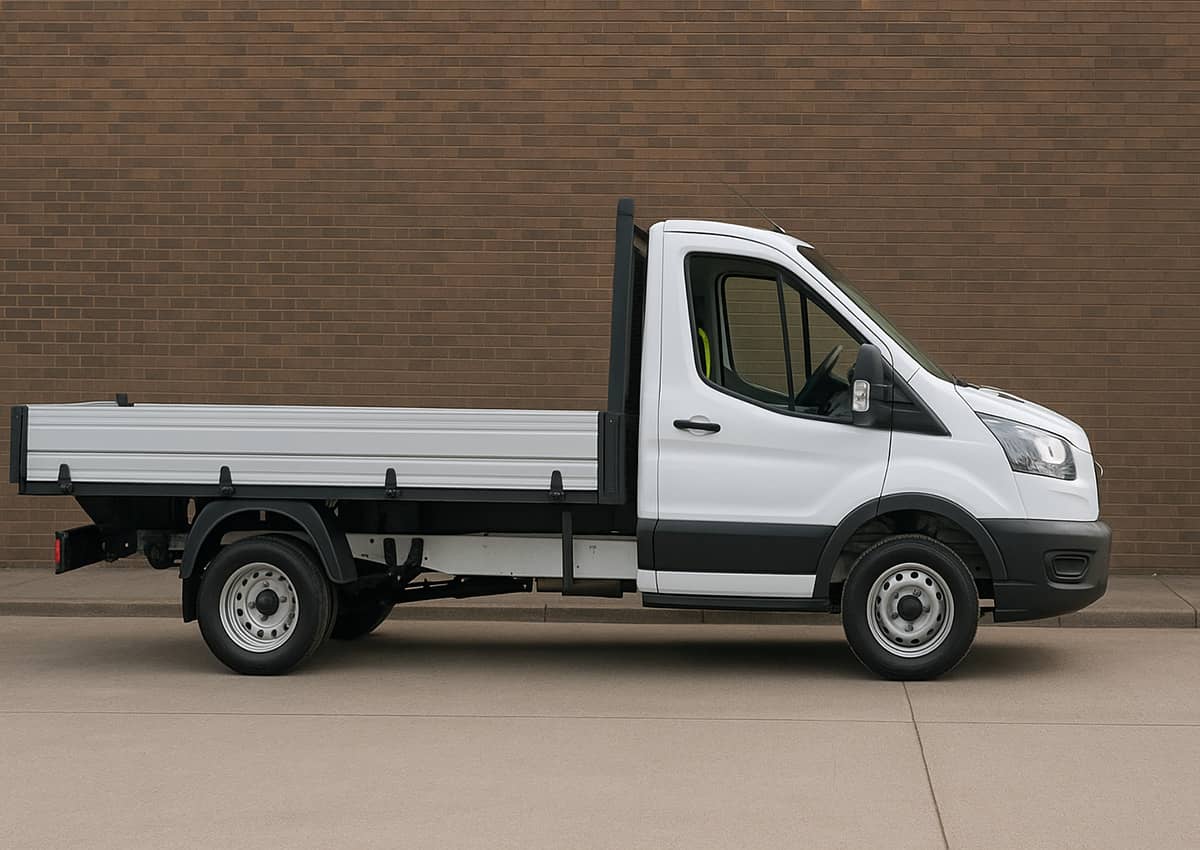
A 3 metre dropside suits fencing panels, boards, bagged materials and smaller tools, and its compact size helps where a lorry would be awkward, provided the load sits within the confirmed payload. A 4 metre body gives more deck length for longer timber and pipe. A dropside with a tail lift is worth discussing for palletised or wheeled goods at a destination without a loading dock. A 7.5 tonne dropside lorry covers longer, heavier or multi-pallet work when the driver, route and unloading plan all suit a lorry.
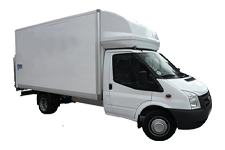
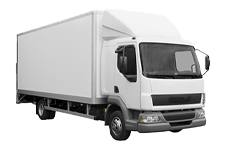
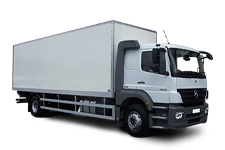
Bed lengths are representative categories, not a promise of the exact vehicle you will receive. Ask for the allocated vehicle's body dimensions and available payload, and remember that a tail lift's rating is a separate figure from what the vehicle can carry. For goods that must stay dry, an enclosed Luton or box body may serve better than an open deck.
Sources: Nationwide Hire UK: 3 metre dropside, Nationwide Hire UK: 4 metre dropside, Nationwide Hire UK: dropside with tail lift, Nationwide Hire UK: 7.5 tonne dropside
Licence, gross weight and payload are separate questions
Maximum authorised mass, also called gross vehicle weight, is the most the vehicle may weigh when loaded, and it is normally shown on the plate or sticker. It is not what you can put on the deck. Payload is what remains once the vehicle itself, the driver, passengers, pallets and packaging are counted. After a part drop, the remaining goods may sit unevenly across the axles, so redistribute before moving on and use a weighbridge if in doubt.
Driving entitlement follows the plated maximum authorised mass. A category B licence generally covers vehicles up to 3.5 tonnes, while vehicles above 3.5 tonnes and up to 7.5 tonnes need C1. Check the categories on each driver's current licence, and ask the supplier about any age, experience or commercial-use conditions, which vary between providers.
Sources: GOV.UK: vehicle weights explained, GOV.UK: driving licence categories, DVSA: HGV overloading basics
Restraining an open load properly
An open deck is both the benefit and the risk. Folding sides make loading from any angle easy, but they are not a restraint system, and a load must never rely on its own weight or friction to stay put. Before loading, inspect the platform, body and anchorage points, then choose restraint for the actual goods: rated straps or chains, chocks for anything that can roll, friction matting under smooth items and the headboard against forward movement. Rope and sheeting hooks are not anchor points.
Ask whether straps or other equipment come with the hire rather than assuming they do. Long timber or pipe that projects beyond the body may need marking, and some projections require advance notice, so measure the overhang and check the current official guidance before you travel.
Sources: DVSA: securing loads on HGVs and goods vehicles, DVSA: load securing basics, DVSA: ways to secure a load, DVSA and DfT: overhanging loads on vehicles
Side loading and unloading at the destination
Pick a clear, level spot where the vehicle can stand as steadily as possible, away from pedestrians and passing traffic. In a busy street that may be the hardest part of the whole job, which is why arrangements with the receiving team should be agreed beforehand: who unloads, with what equipment, and exactly where the goods are going.
Before lowering a side, check whether anything shifted in transit and could fall as it opens. Release restraints in a planned order so the load stays supported throughout. If a forklift or pallet truck is involved, confirm who operates it and whether the ground suits it. Keep anyone not directly involved well clear of the side being worked, and re-secure what remains before driving on.
Sources: HSE: safe loading and unloading, DVSA: securing loads on HGVs and goods vehicles